
The post Covid-19 shifts in consumer behaviour that are reshaping Supply Chains globally
Claire Stuart • October 18, 2024

This is a subtitle for your new post

The Covid-19 pandemic brought disruptions on a scale never seen before and not just affecting one industry but every industry possible had to adapt how their Supply Chain to meet the ever changing demands of the Consumer.


We saw shifts from changing expectations of what the consumer was actually buying, to accelerated adoption of e-commerce in markets that just weren’t ready for the scale-up they needed to deliver to meet this demand. You could quite literally say that covid-19 as the catalyst has brought a chain reaction of events that mean the way consumers shop, live and interact with brands has changed forever.


Some of the main areas I have seen the most impact on Supply Chains are:


The surge in E-Commerce and how it impacted Supply Chains in an instant!


Before the pandemic, online shopping was already growing steadily, but Covid-19 acted as a catalyst, driving e-commerce to new heights. In many markets, consumers turned to online channels for necessities, from groceries to home goods through sheer necessity or out of fear of exposure to people in the stores. Even as brick-and-mortar stores have reopened, e-commerce has maintained its momentum in a number of markets all over the world (but not every market!).


This surge in online shopping has had several critical impacts on Supply Chains:


  • Increased Pressure on Last-Mile Delivery: Consumers now expect fast (often same-day or next-day) delivery, which has meant ever increasing pressure on last-mile logistics. With some organisations having to pivot and invest in solutions like micro-fulfillment centers, local warehouses, and automated delivery systems to meet expectations.
  • Rise of Direct-to-Consumer (DTC) Models: Brands are increasingly bypassing traditional retail channels and selling directly to consumers online. This shift requires a more agile and responsive Supply Chain, focusing on smaller, more frequent shipments and enhanced customer experience. We have also seen this play out in ‘ship from stores’ models too.
  • Demand for Real-Time Visibility: With more purchases made online, consumers expect real-time tracking and updates on their orders. This requires greater visibility and transparency throughout the Supply Chain, driving the adoption of advanced tracking systems to keep consumers informed.


Shifting product preferences and demand volatility!


The pandemic caused a dramatic shift in what consumers buy, with demand for health, wellness and essential goods skyrocketing. At the same time, non-essential items experienced fluctuations, seeing some of the most bizarre items featured in the top 10 items of the week e.g. bread maker. The most proactive organisations saw investing in their Supply Chains as a way of getting head and beating the volatility in demand.


Some of the areas of investment and demonstration of flexibility have been:


  • Agility in inventory management: The unpredictable nature of demand during the pandemic has highlighted the importance of demand forecasting and inventory management. Supply Chains must become more agile, ensuring they can pivot quickly between different product categories to meet fluctuations in demand. This has led many businesses to invest in AI-driven demand forecasting tools that help predict consumer trends more accurately.
  • Increased Focus on Sustainability: Consumers have also grown more conscious about the environmental impact of their purchasing decisions. Post-pandemic, many consumers are seeking brands that offer sustainable products and packaging. Supply Chains are now evolving to meet these demands by sourcing eco-friendly materials, reducing carbon footprints, and embracing circular economy models.


Growing Importance of Supply Chain Resilience


Covid-19 exposed vulnerabilities in global Supply Chains, such as heavy reliance on single suppliers or regions, which led to massive disruptions during the pandemic. Consumers, now more aware of these vulnerabilities, are increasingly looking for reliability and consistency in product availability.


  • Nearshoring and Reshoring: To build more resilient Supply Chains, many companies are shifting from offshoring production in distant countries to nearshoring (bringing production closer to home) or reshoring (bringing it back to domestic markets). This reduces the risks associated with long lead times and dependence on specific regions.
  • Supplier Diversification: Businesses are diversifying their supply base, moving away from single-supplier relationships, which reduces the risk of future disruptions. This shift also allows supply chains to better manage fluctuating demand and mitigate geopolitical risks.


A Consumer-driven Supply Chain “Chain Reaction”!


Consumer behaviour has fundamentally changed in the wake of COVID-19, and Supply Chains must evolve to keep pace. Businesses that adapt to these shifts—by embracing e-commerce growth, enabling omni-channel experiences, enhancing Supply Chain resilience, and focusing on sustainability—will emerge stronger and more competitive in the post-pandemic world.


The key to success is agility. By investing in technology, resilient Supply Chain practices, and customer-centric strategies, companies can not only meet changing consumer expectations but also thrive in the new normal.


Are you seeing changes in your industry or business related to post-Covid consumer behaviour?


Let me know in the comments how you're navigating these shifts!

By Claire Stuart July 1, 2026
Supply Chains within the FMCG industry have always moved quickly, but the pace and complexity of the market have changed significantly. Businesses are no longer just managing products, suppliers, stock and cost. They are navigating changing consumer expectations, retailer pressure, shorter innovation cycles, packaging complexity, sustainability requirements, tighter margins and the growing use of technology across planning, procurement, logistics and operations. The scale of the sector makes this especially important. According to the Australian Food and Grocery Council, Australia’s food and grocery manufacturing sector recorded a 5.3% increase in turnover to $173 billion and now supports nearly 300,000 jobs . That makes Supply Chain capability a commercial issue, not just an operational one. The common thread across recent industry commentary is clear. Supply Chain functions within the FMCG industry are becoming faster, more complex, more technology-led and more commercially important. Industry coverage from Inside FMCG continues to highlight the pace of change across grocery, convenience, pharmacy and broader consumer goods markets. At the same time, a recent SupplyChainBrain article explored how businesses are rethinking the role of Supply Chain in commercial performance. For FMCG businesses, this is important. Supply Chain is no longer just the function that keeps things moving. It is increasingly central to growth, customer experience, innovation, efficiency and resilience. That creates a very real recruitment challenge. Do businesses have the right people in place to turn Supply Chain complexity into commercial value? FMCG Supply Chains are becoming harder to manage In FMCG, small changes can have a large impact. A packaging change, product launch, retailer promotion, supplier issue or shift in customer demand can quickly affect planning, procurement, manufacturing, warehousing, transport and customer service. What looks straightforward to the end consumer often relies on a complex network of decisions behind the scenes. Packaging is a good example. A simple visual update or format change can involve suppliers, materials, compliance, production timelines, stock planning, cost management, sustainability targets and speed-to-market pressures. That is why the people behind the Supply Chain matter so much. Businesses need professionals who can manage the technical details but also understand how their decisions affect the wider business. The strongest Supply Chain professionals are not just focused on process. They understand risk, cost, customer expectations, stakeholder pressure and commercial outcomes. Technology is changing what good looks like Technology is also reshaping Supply Chain roles. AI, automation, analytics, forecasting tools, ERP systems and warehouse technology are giving businesses access to more information and more ways to improve performance. However, technology does not remove the need for strong people. It changes the type of capability businesses need. A forecasting tool still needs someone who understands the market, the customer, the product and the operational reality. A warehouse automation project still needs people who can lead change, manage adoption and bring teams with them. An AI-enabled planning process still needs human judgement, accountability and commercial context. This is where recruitment becomes more nuanced. The best candidates are not always the ones with the longest list of system names on their CV. They are the people who can use data, technology and insight to make better decisions. They can connect what the system says with what the business actually needs. For employers recruiting for Supply Chain roles within the FMCG industry, this means hiring criteria need to keep evolving. The skills gap is becoming more visible As Supply Chains become more sophisticated, the gap between the skills businesses need and the talent available in the market is becoming harder to ignore. Many organisations are now looking for Supply Chain professionals who can bring together several capabilities at once. Technical Supply Chain knowledge still matters, but it is no longer enough on its own. Businesses increasingly need people with: Strong technical knowledge across planning, procurement, logistics, operations or transformation Commercial awareness Data and systems confidence Stakeholder management skills Change management experience Supplier and customer understanding Problem-solving ability under pressure Leadership and influence That combination is not always easy to find. The challenge is not only at senior level. Gartner has found that 55% of supply chain leaders expect agentic AI to reduce the need to hire for entry-level positions . For employers, this raises an important question: if fewer junior roles are created, how will the sector build the future Supply Chain talent pipeline? This is why specialist Supply Chain recruitment is becoming more valuable. A general understanding of recruitment is not always enough when the role requires a clear understanding of planning, S&OP, procurement, manufacturing, logistics, warehousing, operations, transformation or merchandising. The difference between a good hire and the right hire often comes down to nuance. A candidate may have strong demand planning experience, but limited exposure to FMCG pace and complexity. Another may have excellent logistics leadership experience but need support transitioning into a broader operations role. Someone else may not tick every box on paper, but could bring the adaptability, commercial thinking and stakeholder skills needed to succeed. That is where market knowledge matters. Businesses need people who can turn complexity into value Complexity alone does not create growth. People do. The right Supply Chain professionals help businesses make sense of uncertainty, connect data to decision-making and turn operational challenges into commercial opportunities. They can identify where processes are slowing the business down. They can improve collaboration between teams. They can challenge assumptions, strengthen supplier relationships and support better planning. They can also lead transformation in a way that brings people with them, rather than simply introducing new systems and expecting results. In FMCG, this capability is especially valuable because the margin for error can be small. Delays, stock issues, poor forecasting, supplier problems or failed product launches can have immediate financial and reputational impact. A strong Supply Chain team helps protect the business from those risks while also creating the conditions for growth. What this means for Supply Chain hiring in 2026 For businesses hiring Supply Chain talent in 2026, job descriptions may need to evolve. Years of experience still matter, but they should not be the only measure of suitability. Employers also need to consider whether a candidate can: Work effectively across functions Understand commercial priorities Use data to support better decisions Adapt to new technology Communicate clearly with different stakeholders Manage ambiguity and change Balance cost, service, speed and risk Lead teams through complexity This is particularly important for senior Supply Chain roles, but it also applies to specialist and mid-level positions. The future talent pipeline needs to be built around capability, not just job titles. For candidates, the message is similar. Technical experience remains important, but the ability to show commercial impact will become increasingly valuable. Employers want to understand not just what you managed, but what you improved, influenced or delivered. That might include reducing cost, improving service levels, supporting a system implementation, strengthening supplier performance, improving forecast accuracy, leading a team through change or helping a business respond to shifting customer demand. Why specialist recruitment matters Supply Chain is not a generic function, and Supply Chain recruitment should not be treated as a generic process. A strong Supply Chain recruiter needs to understand the difference between planning and S&OP, procurement and sourcing, warehousing and transport, operations and transformation. They need to understand what different industries require, how candidate capability translates between sectors and where a less obvious candidate could be the right fit. At Chain Reaction Recruitment, we specialise in permanent, contract and executive recruitment across Supply Chain, Operations, Logistics and Procurement. Our work is grounded in genuine sector knowledge, strong networks and a clear understanding of the skills businesses need to succeed in complex Supply Chain environments. As the FMCG industry continues to evolve, the Supply Chain functions that support it will need to keep changing too.The businesses that succeed will be those that invest in the people behind the process. Technology will continue to evolve. Market pressure will continue to increase. Consumer expectations will keep shifting. But the ability to turn complexity into growth will still depend on the quality of the people making decisions every day. For businesses looking to build stronger Supply Chain teams, or professionals considering their next move in Supply Chain, Logistics, Procurement, or Operations, now is the time to think carefully about capability, fit, and future potential. Looking for specialist Supply Chain recruitment support?  Chain Reaction Recruitment partners with businesses and professionals across Australia to connect the right talent with the right opportunities across Supply Chain, Operations, Logistics and Procurement within the FMCG and Retail sectors. Get in touch to discuss your next hire or career move.
By Claire Stuart April 12, 2026
Explore the key pressures shaping Supply Chain leadership in 2026, from capability gaps to technology readiness, customer expectations and operational performance.
By Claire Stuart December 5, 2024
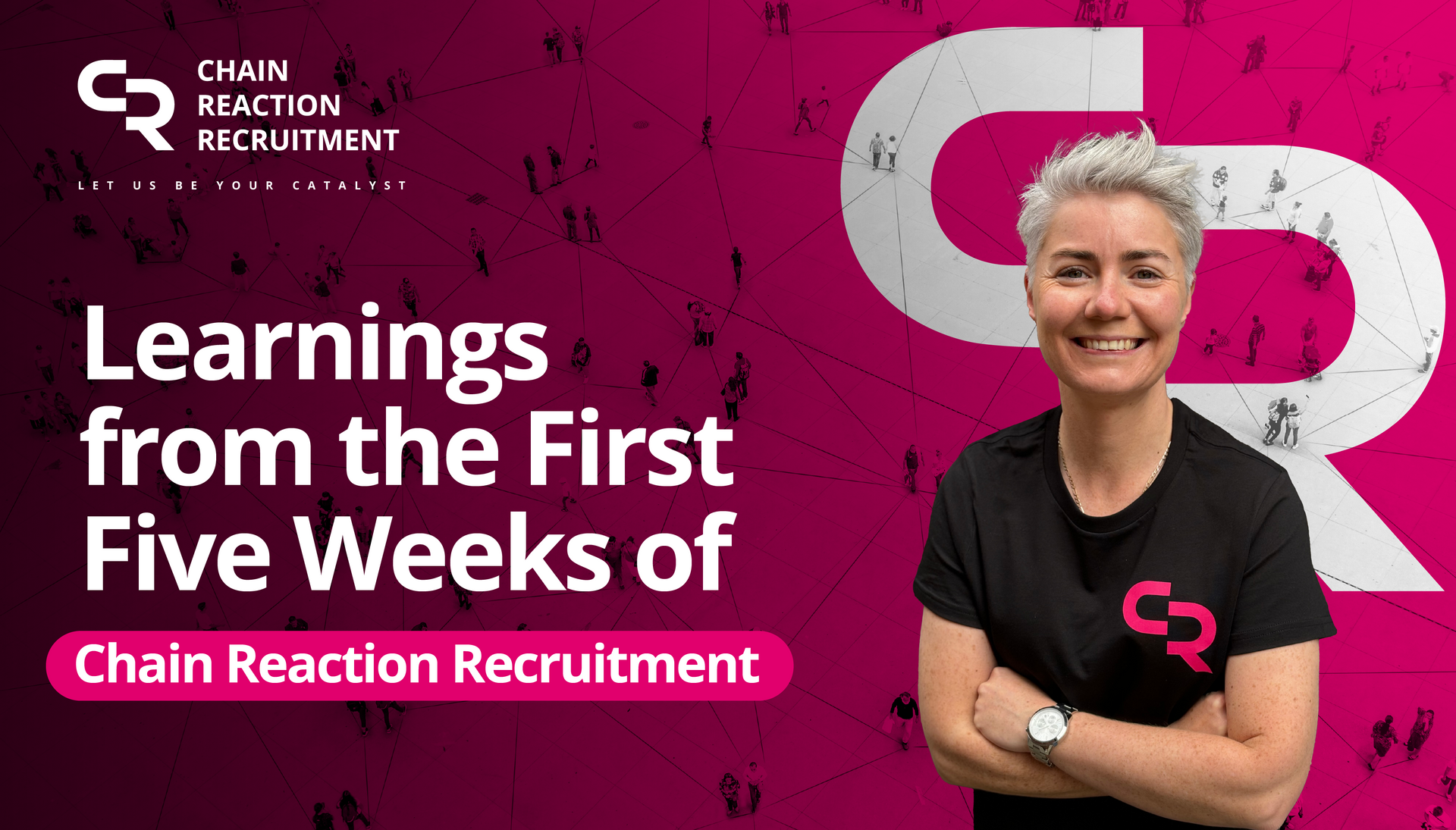
Starting a new business is always full of surprises, challenges, and, most importantly, valuable lessons. Over the past five weeks, Chain Reaction Recruitment has experienced significant growth and discovery. From stepping into the unknown to forming genuine connections, these early lessons have shaped the foundation for what’s to come. Here’s a look at the key takeaways from the first weeks of building Chain Reaction Recruitment. Week 1: Expectation vs. Reality The first week of running Chain Reaction Recruitment came with a few surprises. What seemed like a huge shift in the way things would operate turned out to be not so different after all. It’s not so different – The assumption that the work would change drastically was quickly proven wrong. The mission has always been the same—connecting talented individuals. People are kind – Even without the backing of a large corporate, it became clear that people genuinely want others to succeed. When you’re authentic, knowledgeable, and add value, people are more than willing to support you. Your ‘why’ is important – Understanding the purpose behind the work helps to form deeper, more meaningful connections. This week provided the chance to share the personal journey in a way that felt true to myself, helping to build stronger relationships. Week 2: Leaning Into the Unknown By week 2, the learning curve became steep, as expected. Stepping into the unknown was both exciting and exhilarating. Technology is your friend when used correctly – The right systems and processes, specifically designed for the sectors supported, helped create efficient workflows, ensuring speed and quality service. Knowing your own value – With over a decade of experience in Supply Chain and Planning and S&OP recruitment, it became evident that aligning with values-driven partnerships is essential. The focus now is on working with those who share similar goals and vision. You are only as strong as the team around you – While starting out as a solo operator was the initial plan, I quickly realised the importance of building a strong support network. A handpicked team of trusted vendors has been invaluable in setting the business up for success, leaving me to focus on what I do best—connecting talented individuals. Week 3: Connections Through Vulnerability, Gratitude, and Humour By week 3, the power of authenticity became even clearer. Vulnerability, gratitude, and humour proved to be key in building trust and opening doors. Vulnerability – Sharing the challenges of starting Chain Reaction Recruitment allowed others to relate and trust in the journey. It also created a space where others felt comfortable sharing their own stories. Gratitude – Even when potential customers weren’t in a position to move forward, taking the time to thank them made a big difference. Showing appreciation for their time and response helped build goodwill and opened new possibilities. Humour – Authenticity is at the core of Chain Reaction Recruitment, and that means bringing my true self to conversations. A bit of humour and quick wit have proven to be a great way to connect with others and make the experience more enjoyable. Week 4: Saying ‘Yes’ to New Opportunities By week 4, it was all about stepping out of my comfort zone. Saying "yes" to opportunities I wouldn’t have considered before proved to be a game-changer. ‘Do one thing every day that scares you’ – Leaning into the unknown, even when it’s uncomfortable, has helped broaden my mindset and opened up new opportunities. The more I embraced challenges, the more growth I experienced. Don’t make assumptions – Asking the right questions and keeping an open mind has led to better decision-making. Staying flexible and open to different possibilities has been key in delivering better outcomes for customers. Be open-minded – Saying “yes” has led to new opportunities and opened up doors I hadn’t expected. Being open to what’s out there has proved to be invaluable for both personal and professional growth. Week 5: Stepping Into Clarity By the fifth week, a moment of clarity arrived. The realisation that not everything needs to be done the same way it’s always been done came into focus. ‘We’ve always done it this way’ – Just because something has worked in the past doesn’t mean it’s the right approach for the future. Adapting to change is essential, and creativity is key when finding solutions for evolving customer needs. ‘Trust the process’ – Success doesn’t happen overnight, and it’s important to have faith in the journey. By staying consistent and doing the right things, the rewards will follow in time. ‘Be comfortable with being uncomfortable’ – Stepping into discomfort often leads to the biggest wins. Sometimes, the smallest acts that seem challenging are the ones that bring the greatest results. The first five weeks of Chain Reaction Recruitment have been filled with both challenges and breakthroughs. There’s no doubt the journey has only just begun, but the lessons learned so far are laying the foundation for what’s to come. As the business grows and evolves, staying curious, authentic, and adaptable will continue to drive success. If you’d like to get in touch or learn more about Chain Reaction Recruitment, don’t hesitate to reach out , or you can also get in touch with us at claire@chainreactionrecruitment.com.au or 0468 945 182 Let’s start a chain reaction together.
More Posts